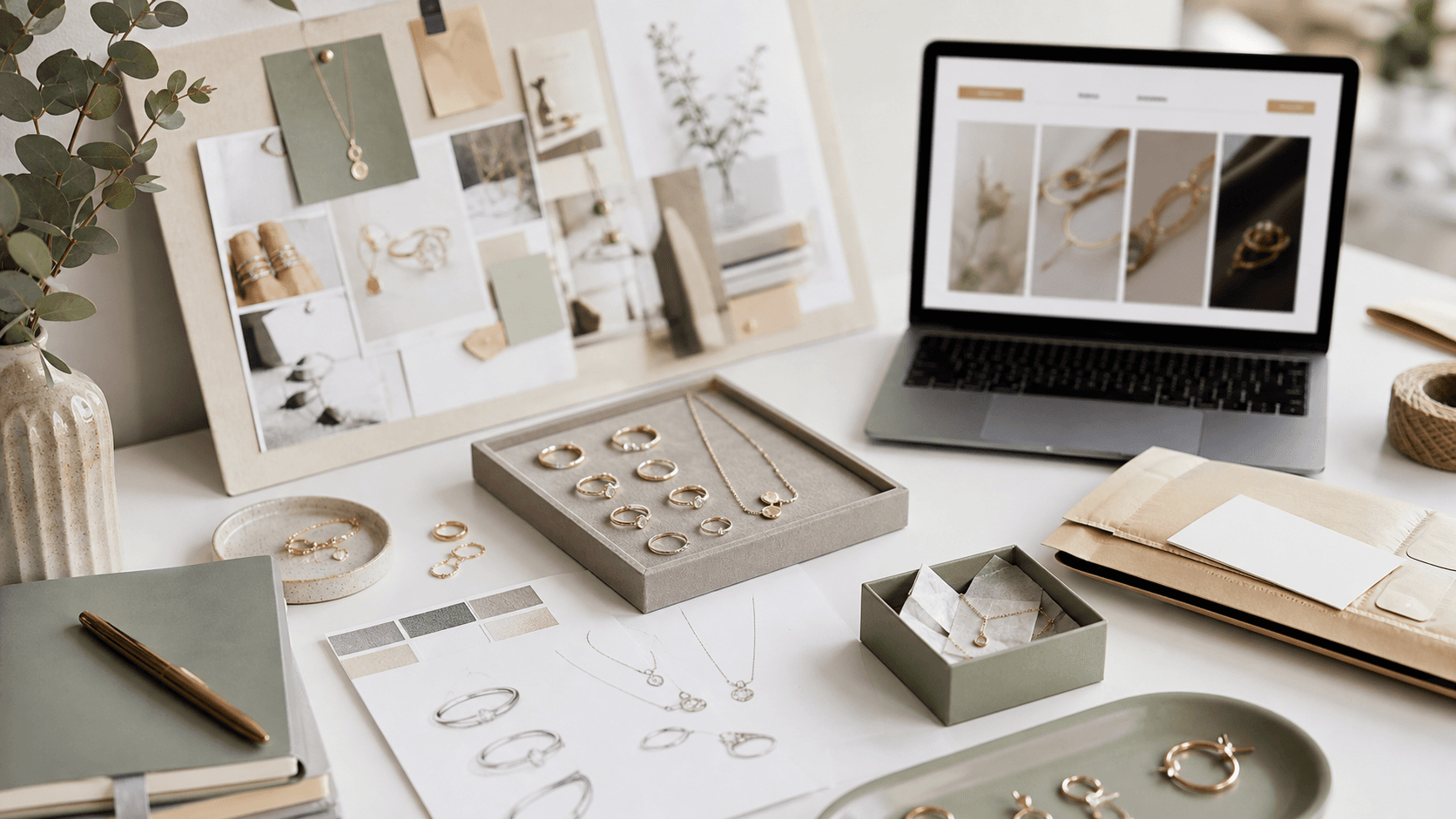
Start with a clear point of view before you buy materials or build a website. A jewelry business is easier to market when the customer can quickly understand the style, price range, and reason to choose your pieces.
Choose a focused product line for the first launch. Ten strong pieces in one visual family usually work better than fifty unrelated ideas. Define the metal tone, materials, target price, and occasion each piece is designed for.
Real brand lesson: Kendra Scott is often cited as starting her company in 2002 with $500 and selling to local boutiques from a small first collection. The useful takeaway is not the myth of starting small; it is the discipline of putting finished pieces in front of real buyers quickly instead of waiting for a perfect catalog.
Action points: define one customer, choose one material family, price every SKU before production, photograph samples in one consistent style, and collect emails before launch day. If any step feels vague, make it smaller until it can be done this week.
Validate demand with small tests. Share prototypes, collect email signups, ask shoppers which piece they would buy first, and pre-sell limited batches when possible. The goal is to learn before inventory becomes expensive.
Set prices from the real cost structure: materials, labor, packaging, payment fees, shipping supplies, returns, and marketing. If wholesale may matter later, leave enough margin now so the business model does not break when a retailer asks for a 50 percent discount.

Launch simply. A clean store, good product photography, clear shipping policy, and a few useful buying guides can outperform a complicated brand system that delays the first sale.
A useful first target is a 30-day validation sprint. Week one is customer definition and product sketches. Week two is materials and prototype costing. Week three is photography, product page copy, and email capture. Week four is a small release to a real audience. This keeps the founder from spending six months building around assumptions that have never met a buyer.
Real brand story: Kendra Scott's early story is often used by founders because it shows how local selling can validate a jewelry line before a large brand exists. The practical lesson is to get close to buyers early, watch which pieces they touch first, and use those conversations to tighten the line rather than guessing from behind a screen.
Action points: write one sentence describing the customer, choose five launch pieces, calculate the full cost of each piece, photograph the prototypes in one visual style, and ask ten likely customers which piece they would buy first. Do not add more SKUs until you can explain why each piece belongs.
The first collection should have a clear buying path. If the customer lands on the site and sees five metals, six aesthetics, and no styling guidance, the founder has transferred the decision burden to the shopper. A focused first line makes the brand easier to remember and the product pages easier to write.
Founders should also decide what they will not sell yet. Custom work, repairs, wholesale, bridal, and international shipping can all be profitable later, but each adds operational complexity. Saying no early is often what keeps a small launch from becoming unmanageable.
A strong launch page answers practical questions without sounding defensive: what the piece is made from, how it fits, when it ships, how to care for it, and what happens if there is a problem. Those details reduce support volume and help customers feel safer buying from a young brand.