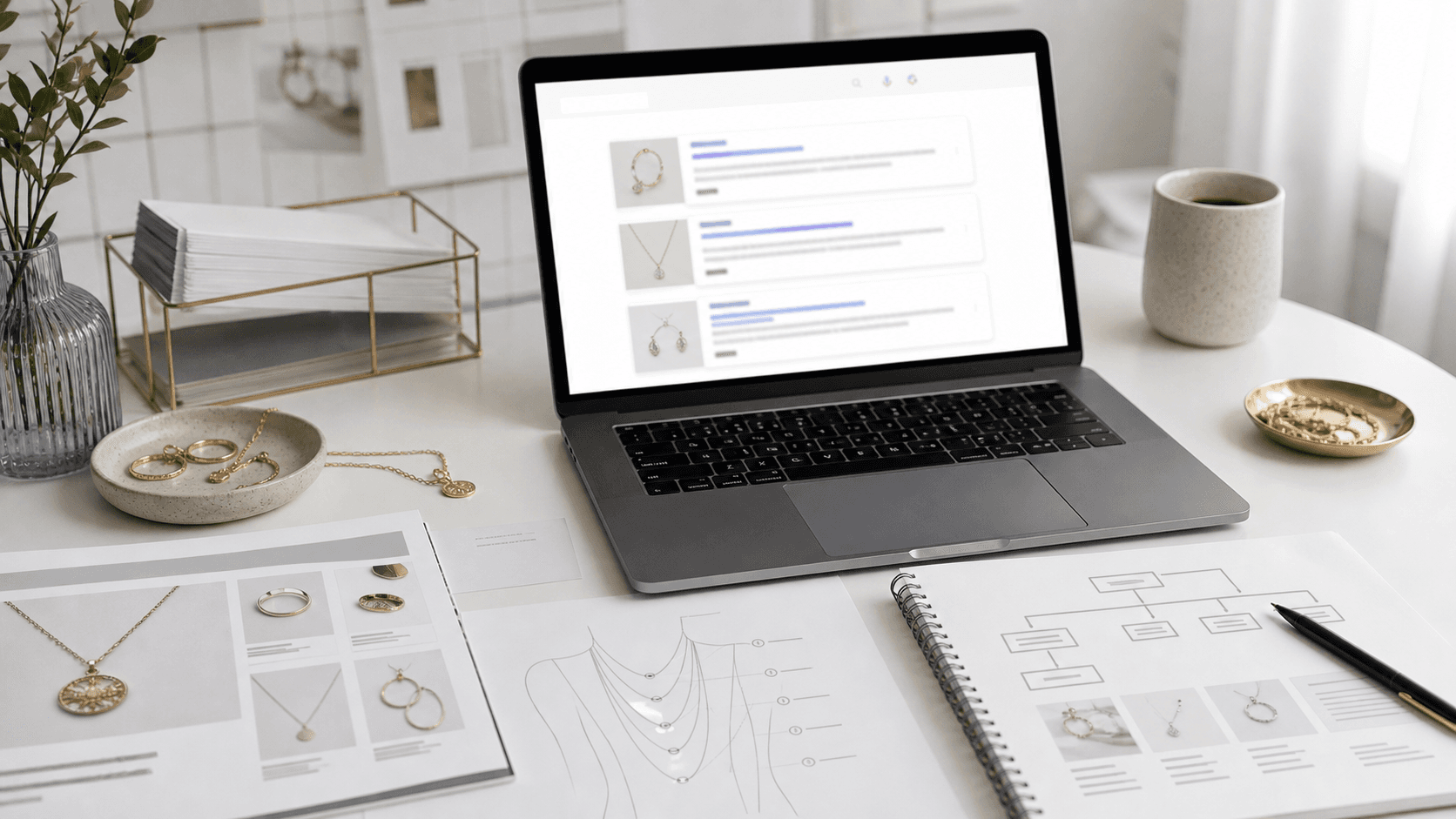
Jewelry SEO starts with clarity. Search engines and customers both need clean category names, descriptive product titles, fast pages, and useful content that answers buying questions.
Use one page per intent. A page for gold hoop earrings should not also try to rank for pearl necklaces, bridal gifts, and jewelry care. Focused pages are easier to optimize and easier for shoppers to understand.
Real brand lesson: online-first jewelry brands such as Mejuri and Aurate show how education, materials clarity, and product-page confidence can reduce friction before a shopper ever contacts support. Smaller brands can use the same principle with better guides and clearer product pages.
Action points: write one guide for each recurring customer question, link each guide to relevant products, add care details to every product page, and check that titles describe the actual piece rather than a vague mood.
Write product descriptions with real details: dimensions, weight, materials, finish, closure, hypoallergenic notes, care, and styling ideas. Avoid vague copy that could apply to any piece.
Create internal links between guides and products. A guide about necklace lengths should link to relevant necklaces, and product pages should link back to care or sizing information.
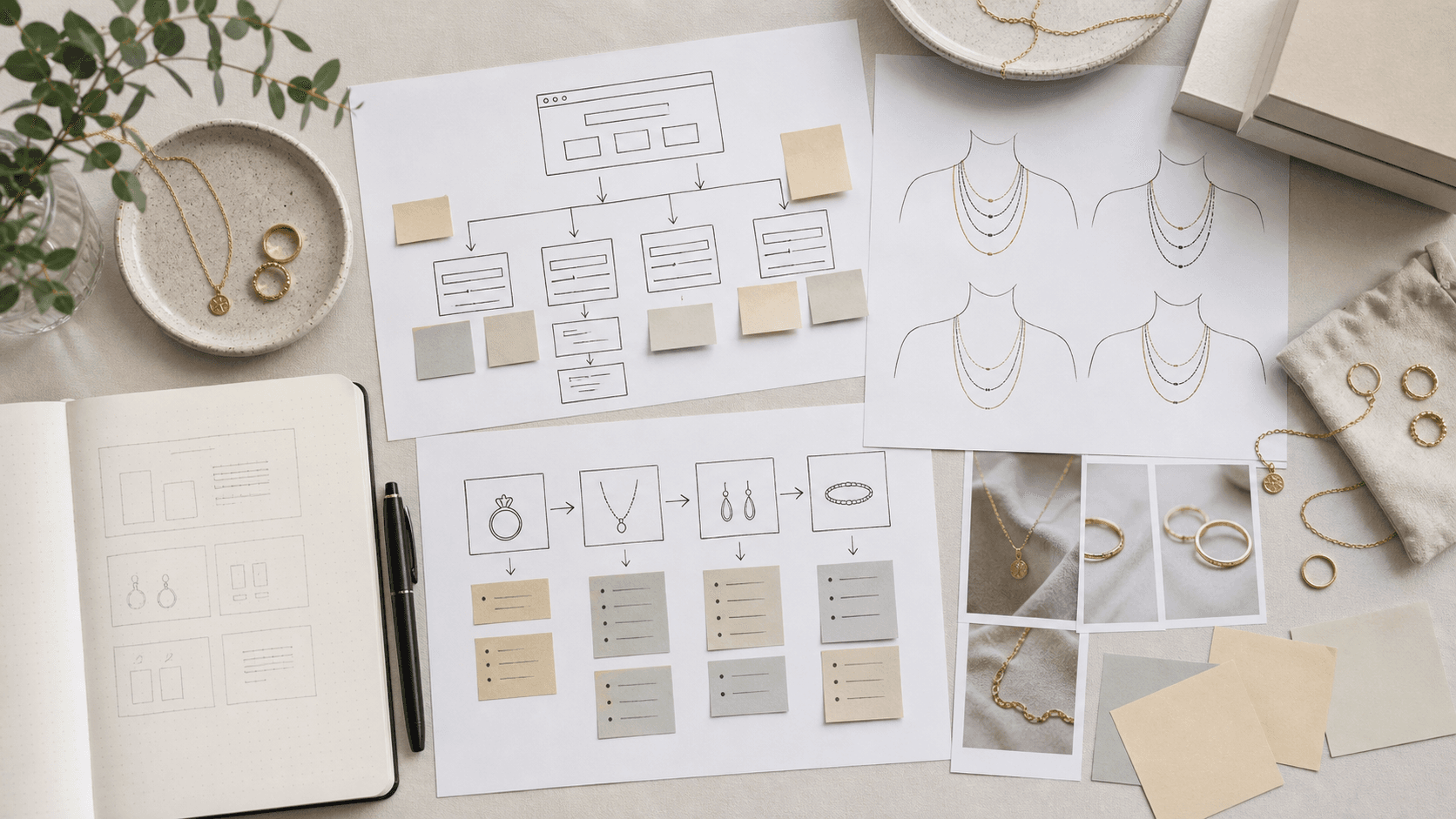
Keep the site fast and indexable. Use compressed images, semantic HTML, metadata, sitemap, robots file, and readable URLs. Technical basics will not replace great products, but they prevent avoidable SEO drag.
Jewelry SEO is strongest when it is built around buyer questions, not abstract keywords. A shopper may search for necklace length, gold filled care, ring stacking ideas, hypoallergenic earrings, or bridesmaid jewelry. Each question can become a guide that naturally supports relevant products.
Real brand lesson: Online-first brands such as Mejuri and Aurate show how material education and product-page clarity can reduce buying friction. A small brand can compete by being more specific: exact dimensions, clasp details, care notes, styling ideas, and honest material comparisons.
Action points: list the ten questions customers ask before buying, turn the top three into guides, link each guide to matching products, and add one internal link from every product page back to a useful care or sizing article.
Internal links should feel like service, not manipulation. A necklace length guide should link to necklaces because the reader is choosing a length. A care guide should link to materials because the reader is trying to protect a purchase. Relevance matters more than volume.
Technical basics still matter. Compress images, use descriptive alt text, keep URLs readable, write unique titles and descriptions, and maintain sitemap and robots files. These tasks will not create demand alone, but they remove avoidable barriers for search engines and AI readers.
The best SEO calendar is close to the sales calendar. Publish gift guides before gifting seasons, bridal content before wedding planning peaks, and care content when customers are most likely to receive or travel with jewelry. Timing gives useful content more commercial leverage.