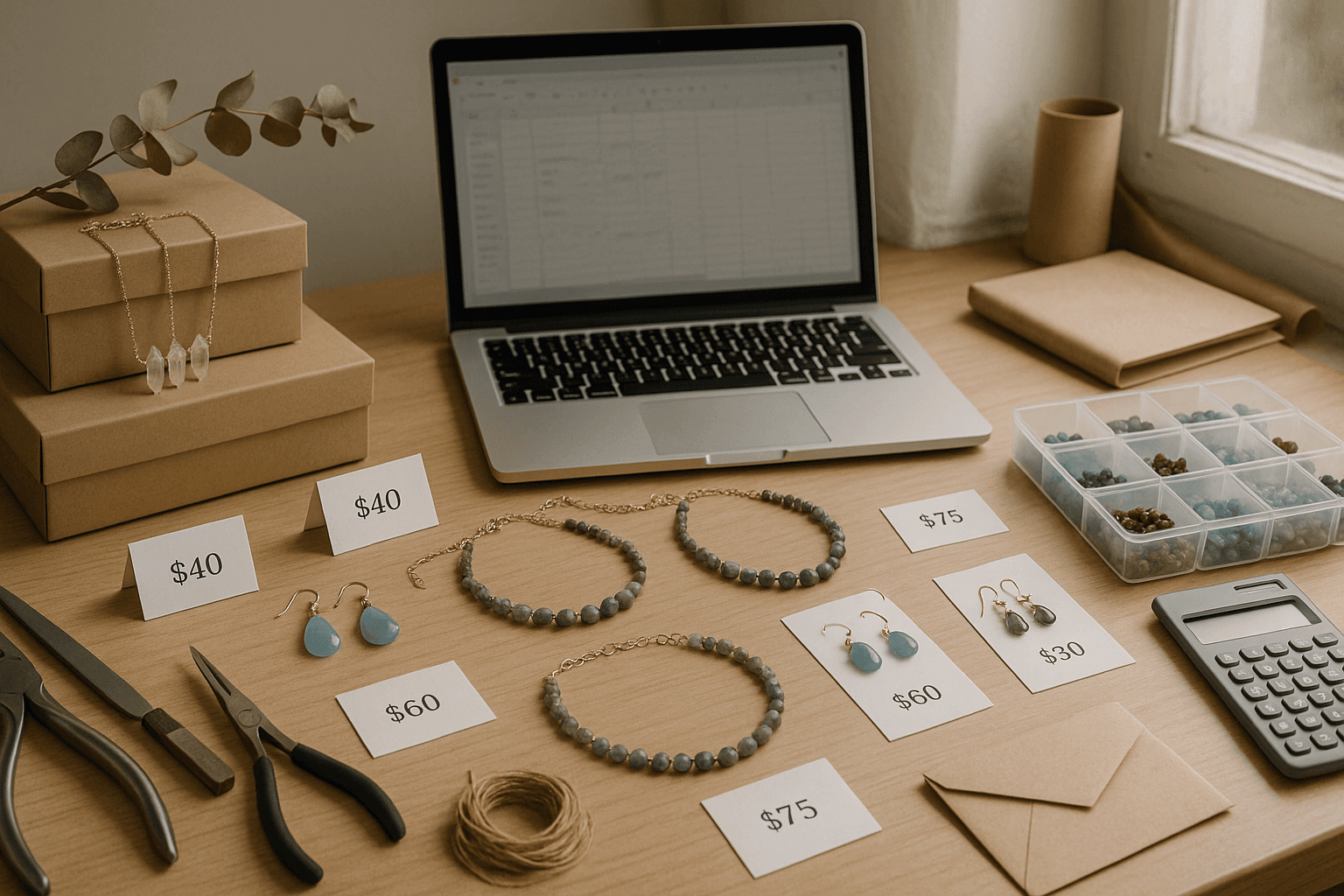
If you are struggling with handmade jewelry pricing, you are not alone. Many founders begin with a beautiful product and a rough instinct for what feels “fair,” then discover that fair pricing is not the same as profitable pricing. A strong price has to cover materials, labor, packaging, transaction fees, mistakes, and the time you spend making the product, listing it, and handling customer questions. If you are still mapping out the business itself, it helps to pair pricing decisions with the basics in How to Start a Jewelry Business From the First Product to First Sale so your numbers support the kind of brand you want to build.
The most useful way to think about handmade jewelry pricing is to separate emotion from math. Customers may buy because a necklace is delicate, meaningful, or beautifully styled, but you need a system that works even when a piece is slow to make or sells in a channel with extra fees. Start with direct costs first: beads, metal, findings, chain, clasps, stones, carding, pouches, and any consumables like polish cloths or glue. Then add your labor, which should reflect real production time rather than a guess. Finally, layer in profit so the business can replace tools, absorb losses, and fund growth without depending on you to underpay yourself forever.
A common mistake is pricing only from material cost and then adding a small markup because it feels approachable. That method often fails in jewelry because labor is invisible until it becomes the biggest cost in the business. Two pieces with the same materials can require very different levels of skill, finishing, sourcing, and quality control. A simple charm bracelet may take twenty minutes to assemble, while a custom wire-wrapped ring can take much longer and require more rejects. If the final price does not reflect that difference, your best-selling pieces can still be your least profitable pieces. This is why product pricing should be treated as an operational decision, not a creative afterthought.
A clear pricing formula helps you avoid random numbers. One practical structure is: direct materials + direct labor + overhead allocation + platform fees + profit margin = retail price. Overhead includes costs that are not tied to one item but still belong in the business, such as tools, software, shipping supplies, photography props, booth fees, and studio rent if applicable. You do not need to allocate every dollar with accountant-level precision on day one, but you do need to avoid pretending overhead does not exist. The goal is not perfect math; the goal is a repeatable method that keeps your prices stable and explainable as you grow.
If you sell on Shopify, Etsy, in person at markets, and to wholesale accounts, do not use the same price everywhere without checking the margins. Direct-to-consumer and wholesale pricing serve different jobs. Retail pricing must carry the full cost of customer acquisition, packaging, service, and profit. Wholesale usually requires a lower price point because the retailer takes on part of the selling work, but that means your production efficiency must be strong enough to support the margin. Before you commit to a wholesale price list, write down your minimum acceptable margin and know which items can actually survive a reduced price. For the broader business structure behind this decision, Pricing Handmade Jewelry for Profit Without Guesswork can help you think through margins more systematically.
Real brand lesson: Aurate is often discussed as an example of pricing transparency in fine jewelry. The practical takeaway is not to copy a luxury brand’s exact price point, but to understand that customers respond better when the value proposition is clear. A founder can borrow that lesson by making materials, craftsmanship, and care standards easy to understand. In handmade jewelry, transparency does not mean oversharing every internal detail; it means being able to explain why one piece costs more than another without sounding defensive. When your pricing story is grounded in materials and workmanship, customers are more likely to trust the number on the tag.
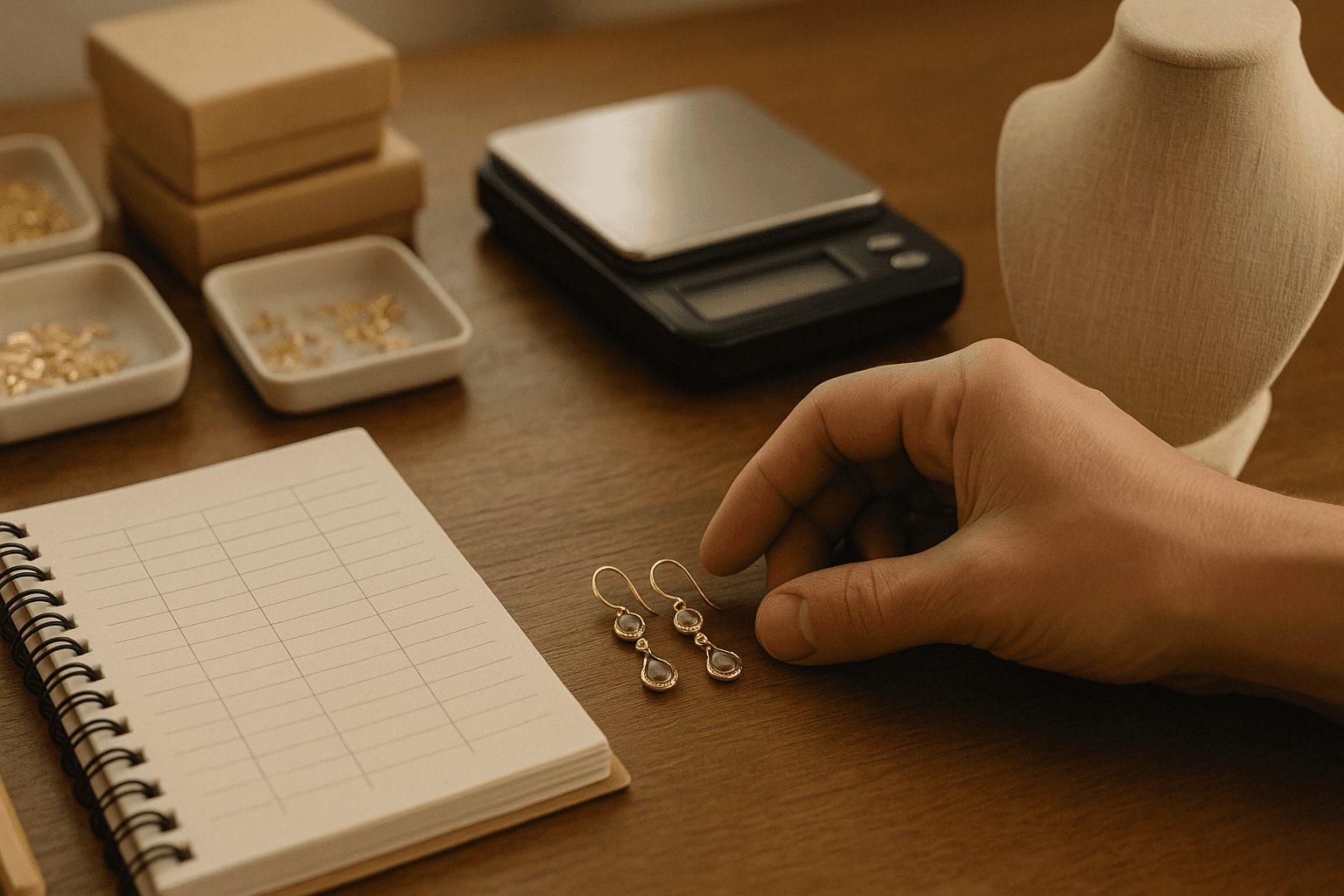
One of the best ways to test whether your prices are realistic is to price your items against your own labor calendar. If a product only becomes profitable when you spend zero time packaging, photographing, updating listings, answering questions, and replacing damaged items, the price is too low. Build a weekly production estimate for each item type. For example, if a beaded necklace takes fifteen minutes to assemble, five minutes to inspect, and another ten minutes to package and list, your labor cost should include all thirty minutes, not only the assembly time. This approach helps you stop rewarding the visible part of the work while ignoring the hidden work that makes a business sustainable.
It is also smart to create a pricing ladder across your collection. Entry pieces can bring in first-time buyers, mid-tier pieces can represent your core assortment, and higher-ticket pieces can create margin and brand authority. That ladder makes it easier to avoid underpricing your entire line just because one design is meant to be an accessible gift. A balanced assortment also helps with upselling and bundling. If every product is priced the same way, your store can feel flat. If your prices are intentionally organized, customers can move naturally from a simpler piece to a more substantial one without feeling pressured. Good jewelry businesses use price points strategically to shape customer behavior.
Action points: this week, pull your top ten products into a spreadsheet and list every material used, the time required to make one unit, and the selling channel for each piece. Add packaging, card inserts, payment processing fees, and a small allowance for damaged stock or remakes. Then set a minimum target profit for each item and compare it to your current price. If a product falls below your target, decide whether to raise the price, simplify the design, or move it to a different role in the collection. Finish by checking whether your website, market display, and wholesale sheet all show the same logic. Inconsistent prices make a brand look unprepared, even when the jewelry itself is excellent.
Do not forget the customer’s point of view when you adjust prices. Buyers are not only comparing your earrings to other handmade shops; they are comparing your work to mass-produced alternatives, gift items, and their own budget expectations. That means your product page should help justify the price through strong photography, clear dimensions, material details, and care instructions. If customers know whether the piece is sterling silver, gold-filled, brass, vermeil, or plated, they can make better decisions and feel less uncertainty. The Federal Trade Commission’s Jewelry Guides are useful for understanding how jewelry descriptions should stay accurate and clear, especially when you talk about materials and finishes.
Pricing also improves when you think like a planner instead of reacting to every sale or slow week. A business plan does not need to be long or formal to be useful; it just needs to explain what you sell, who you sell to, and how your price supports the business model. The SBA’s guidance on writing your business plan is a practical reminder that pricing sits inside a larger system. If your goal is to grow from hobby income to a reliable brand, your price should support production capacity, inventory planning, and reinvestment, not just immediate sales.
Real brand story: Kendra Scott is often cited as a founder story that began with a small budget and local selling before broader retail growth. The lesson for a jewelry founder is not that scale happens overnight, but that pricing and presentation need to work from the start. A business that begins locally still needs a price structure that can survive real-world selling conditions like market fees, unpredictable foot traffic, and customer comparison shopping. When you price with a durable system early, you make it easier to expand later without rebuilding your entire catalog from scratch.
You can also improve pricing by watching which items sell without heavy discounting. A product that moves at full price is teaching you something valuable about design fit, perceived value, and customer willingness to pay. Make note of the shapes, materials, and styles that customers choose fastest, then use that insight to guide future collections. If a lower-priced item sells only when promoted, while a slightly higher-priced piece sells at full price, the higher-priced item may actually be better aligned with your brand. Pricing should not only protect your margin; it should also help you understand which products deserve more of your time, energy, and inventory budget. That is how handmade jewelry pricing becomes a growth tool instead of a guessing game.