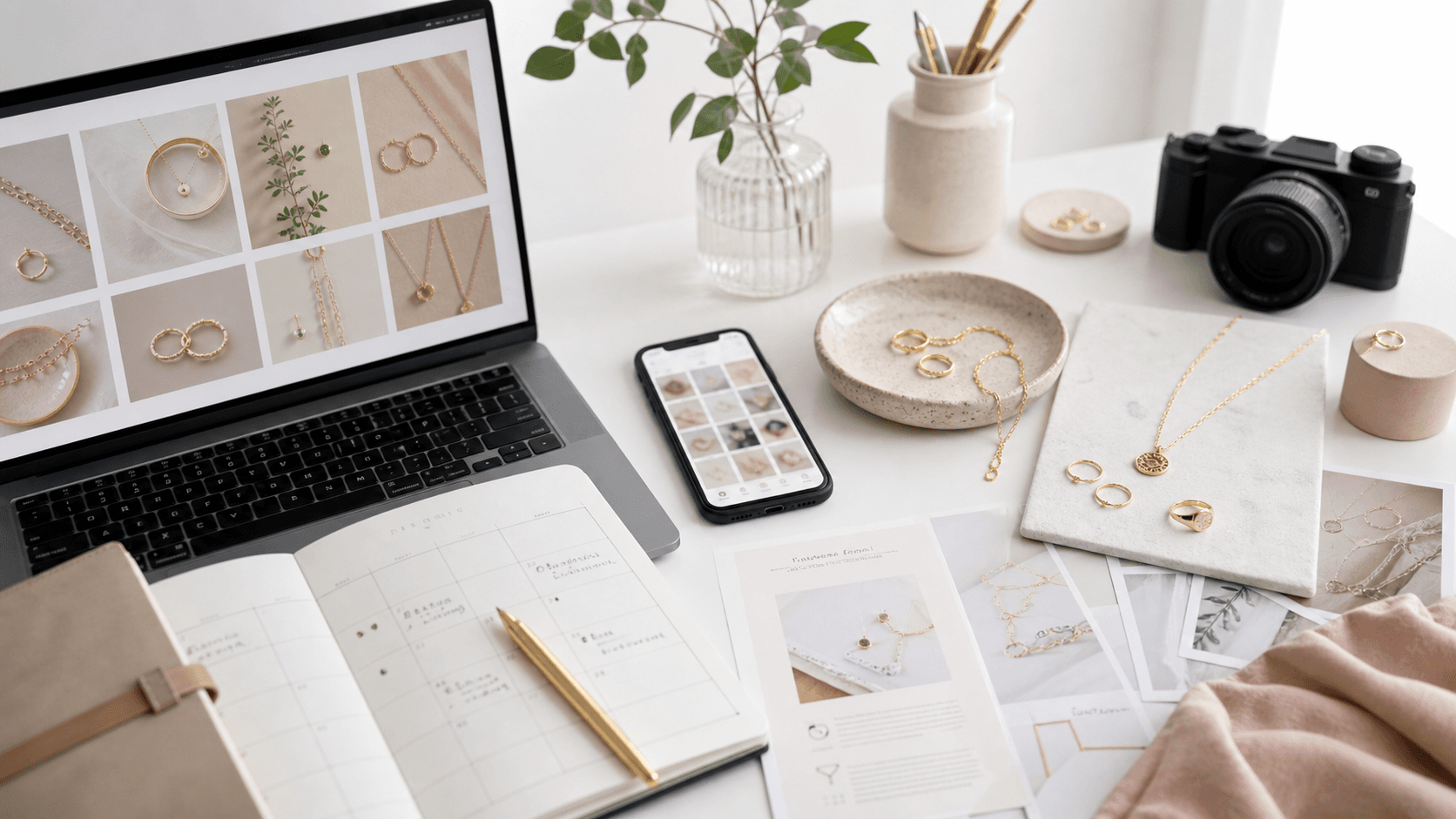
A jewelry marketing plan should make buying feel easy and specific. Customers want to know how a piece looks, how it feels, where they would wear it, and whether the brand can be trusted.
Start with product pages. Use descriptive names, clear material details, size guidance, care instructions, shipping expectations, and photos on different skin tones or outfits when possible. Strong product pages support every marketing channel.
Real brand lesson: Mejuri helped popularize frequent fine-jewelry product drops instead of relying only on seasonal collections. The practical idea for a smaller brand is to create a repeatable reason for customers to return, even if your cadence is monthly rather than weekly.
Action points: choose one campaign theme, write three product stories, build one email around a specific buying moment, and reuse the same story across product pages, social captions, and post-purchase care emails.
Publish search content around buying intent: necklace length guides, gold filled versus gold plated, bridal jewelry checklists, gift guides, and care guides. These articles attract shoppers who are already close to a decision.
Use social content to show movement and context. Short videos of clasps, scale, shine, packaging, styling, and behind-the-scenes production often communicate more than polished still photos alone.
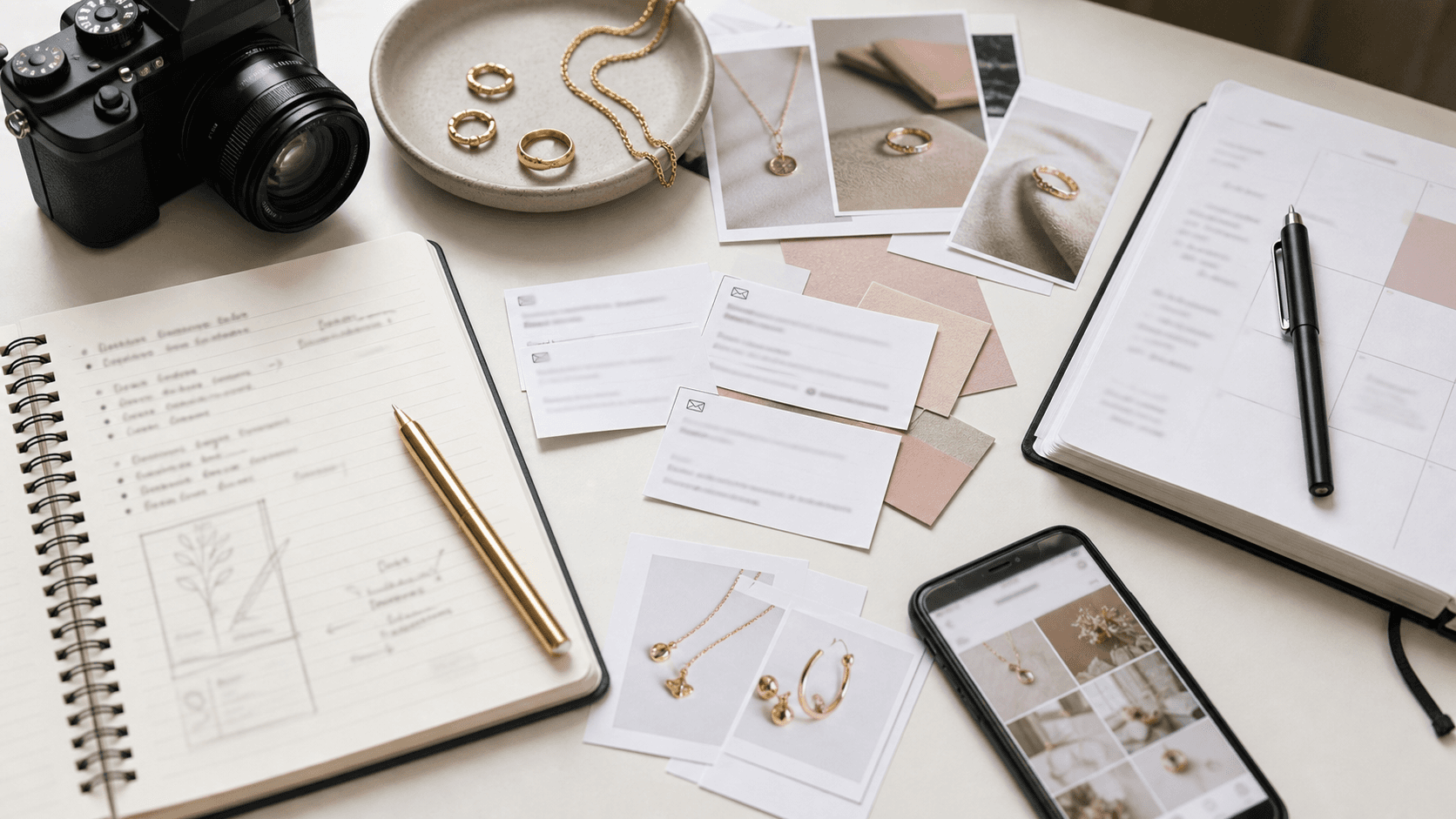
Build email from the beginning. Offer early access, care guides, launch notes, and restock alerts. Email gives the brand a direct audience when social reach changes.
Marketing works best when every channel has a job. Search captures people asking specific buying questions. Social shows movement, scale, styling, and proof. Email turns attention into repeat visits. Product pages convert the buyer who is already interested. When each channel has a role, the founder stops posting randomly.
Real brand lesson: Mejuri's frequent-drop model is useful because it created a reason for customers to come back often. A smaller jewelry business does not need the same cadence, but it can still build anticipation with monthly edits, waitlists, early access, and restock notes.
Action points: choose one product story for the week, turn it into a product-page improvement, one email, three short videos, and one search-friendly guide. Measure which version gets saves, clicks, replies, or sales, then use that response to shape the next campaign.
A good marketing plan also includes proof. That can be customer photos, repair stories, material explanations, packaging details, founder notes, or comparison guides. Jewelry is tactile, and online shoppers need signals that reduce uncertainty before they buy.
Do not make every message a discount. Discounts can move inventory, but if they become the main story, customers learn to wait. Use education, styling, scarcity, gifting moments, and customer care as marketing assets before reaching for price cuts.
The simplest weekly rhythm is publish, show, email, and review. Publish one helpful page or guide, show the product in use, email the most relevant segment, and review the results. A modest rhythm done consistently beats a dramatic campaign that happens once and disappears.