
If you are building a jewelry brand, jewelry SEO is one of the few marketing systems that can keep working after you stop posting, stop paying for ads, or finish a busy market weekend. The goal is not to chase every possible search term. The goal is to help the right buyer find the right product at the right moment, with clear product pages, useful category pages, and content that answers the questions people actually ask before they buy. For a jewelry business, that usually means balancing style, material, occasion, and intent rather than writing generic blog posts that never connect to a sale.
Start with the way real customers search. They rarely type only one word. They search for “gold hoop earrings for sensitive ears,” “minimalist stacking rings,” or “dainty pearl necklace for wedding guest.” That means your SEO work should begin with product language, not abstract brand language. Use the words buyers already use, then organize them into product types, materials, occasions, and problems. If you are still clarifying your offer and collection structure, it can help to revisit how to start a jewelry business from the first product to first sale and make sure your inventory matches what people can actually search for.
A strong jewelry SEO plan usually starts with three page types: product pages, collection pages, and educational content. Product pages should target specific buying intent. Collection pages should group related items in a way that matches how customers browse, such as stud earrings, birthstone jewelry, or everyday chains. Educational content should answer objections and guide comparisons, such as how to choose metal type, how to care for plated pieces, or how to pick the right chain length. When these three layers work together, search traffic has a better chance of turning into sales instead of bouncing off your site.
Think about search intent before you think about volume. A smaller search term can often be more valuable than a broad one if the buyer is ready to purchase. For example, a page optimized for “14k gold hoop earrings” is usually more commercially useful than a page targeting only “earrings.” That is because the specific phrase reveals material preference and shopping intent. In jewelry, specificity matters because shoppers care about skin sensitivity, tarnish resistance, gift-worthiness, and style compatibility. Your best SEO pages speak to those details in the title, intro copy, product bullets, and alt text without sounding repetitive or forced.
Real brand lesson: Mejuri is often discussed as a direct-to-consumer jewelry brand that helped normalize material education and frequent product drops. The practical lesson for smaller founders is not to copy a big brand’s scale, but to copy its clarity. When your site explains what a piece is made of, who it suits, and why it is priced the way it is, you reduce hesitation. A buyer who understands the difference between vermeil, solid gold, and plated brass is more likely to trust your catalog and more likely to return when they want the next piece.
For keyword research, use simple tools and your own customer language before you use anything complicated. Pull phrases from customer messages, market conversations, review language, search autocomplete, and product questions. Then sort those phrases into three buckets: what people want to buy, what people want to compare, and what people need to understand before buying. The Google SEO Starter Guide is useful here because it reinforces the basics: make pages easy to understand, structure content clearly, and build pages for people first. That approach is especially useful for jewelry stores, where visual appeal has to be paired with precision.
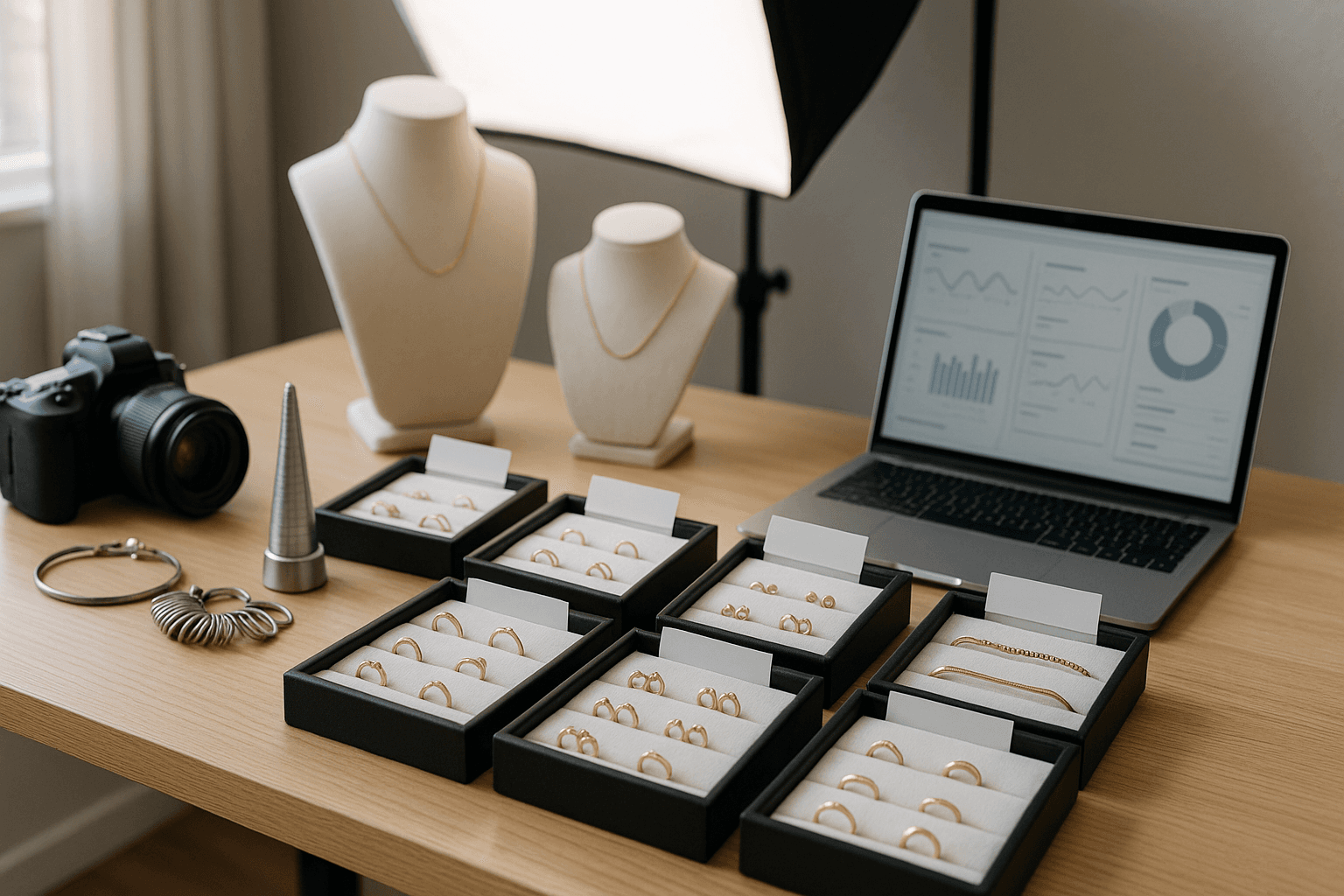
Your product pages deserve more than a title and a price. Include a short opening paragraph that names the item plainly, a few benefit-led bullets, clear material details, dimensions, and care notes. Explain what the customer gets in the box, especially if packaging matters for gifting. If a piece is delicate or has a specific fit, say so. If a necklace drapes differently depending on length, explain that too. Search engines need context, but customers need reassurance. The more specific your page is, the less likely shoppers are to email questions that should have been answered before checkout.
Collection pages are often underused, but they can be some of the strongest pages in a small jewelry store. Instead of listing products with no introduction, add a few paragraphs that explain how the collection is meant to be shopped. A hoop earrings collection might mention sizes, metal finishes, and everyday versus statement styling. A ring collection might explain stackability, width, and stone choices. This is also where internal linking becomes useful. If you are building a broader traffic strategy, pairing product pages with a simple marketing plan for a jewelry brand can help connect search traffic to email, social, and repeat purchase systems.
Content marketing works best when it solves a real buying problem. Write articles that help people choose, compare, or care for jewelry. Examples include deciding between chain lengths, understanding gold-filled versus solid gold, or styling rings for different occasions. This is where the Google helpful content guidance matters because the point is not to write for the algorithm. The point is to show expertise through useful, specific answers. If your article does not help a shopper make a better decision, it probably will not help your SEO for long either.
Real brand story: Catbird is often cited as a Brooklyn jewelry shop that built a strong point of view from a small retail base. The lesson for founders is that search visibility becomes easier when your brand identity is consistent. If your aesthetic is delicate and romantic, your page copy, product naming, and content topics should reinforce that identity. If your brand leans bold and sculptural, your SEO pages should reflect that language. Search works better when people can recognize what you stand for and the site feels cohesive from homepage to checkout.
Action points: This week, audit your top five products and rewrite each title so it includes a clear search phrase a buyer would actually use. Add one or two paragraphs to each collection page explaining what belongs there and who it is for. Create one educational blog post that answers a buying question you hear often, then link it to the related collection and two related products. Check your image alt text and make it descriptive, not decorative. Finally, review your business planning basics with the SBA guide to writing your business plan so your SEO priorities support the rest of your sales strategy.
One of the most overlooked parts of jewelry SEO is how search, merchandising, and trust all support each other. A shopper might discover you through a blog post, click to a collection page, compare two products, and then come back later through a branded search. That means every page should do one job clearly and connect to the next logical step. If you bury product details, hide prices, or make navigation confusing, your traffic will not convert well. But if your site is structured around actual buyer decisions, each page becomes a useful part of a longer journey.
Over time, the best SEO programs for jewelry businesses are not the most complicated ones. They are the most disciplined. They use consistent naming, clear page structure, honest material descriptions, and content that answers the same questions customers ask in person. If you build those habits now, you create a site that can grow with you instead of needing a full rebuild later. That matters whether you are selling your first best seller or expanding into a larger catalog, because the search engine is only the messenger. The real win is making your jewelry easier to understand, easier to trust, and easier to buy.