Jewelry pricing is one of the first decisions that shapes whether a brand feels sustainable or constantly under pressure. If your prices are too low, every sale can create more work without enough profit to reinvest in materials, packaging, photography, or growth. If your prices are too high without a clear reason, shoppers may hesitate. The goal is not to find the perfect formula once and never revisit it; the goal is to build a pricing system that reflects your costs, your positioning, and the real value of your time. This article walks through a practical way to approach jewelry pricing so you can stop guessing and start making decisions with more confidence.
Before you calculate a retail price, you need to understand exactly what goes into one piece. That means materials, findings, metals, stones, clasps, chains, packaging, transaction fees, and the small consumables that are easy to forget, such as polishing cloths, labels, adhesive, or protective pouches. It also means accounting for your labor in a realistic way, not as an afterthought. If you want a broader foundation for setting up your brand, How to Start a Jewelry Business From the First Product to First Sale is a useful companion read because pricing works best when your product, audience, and business model are clear from the beginning.
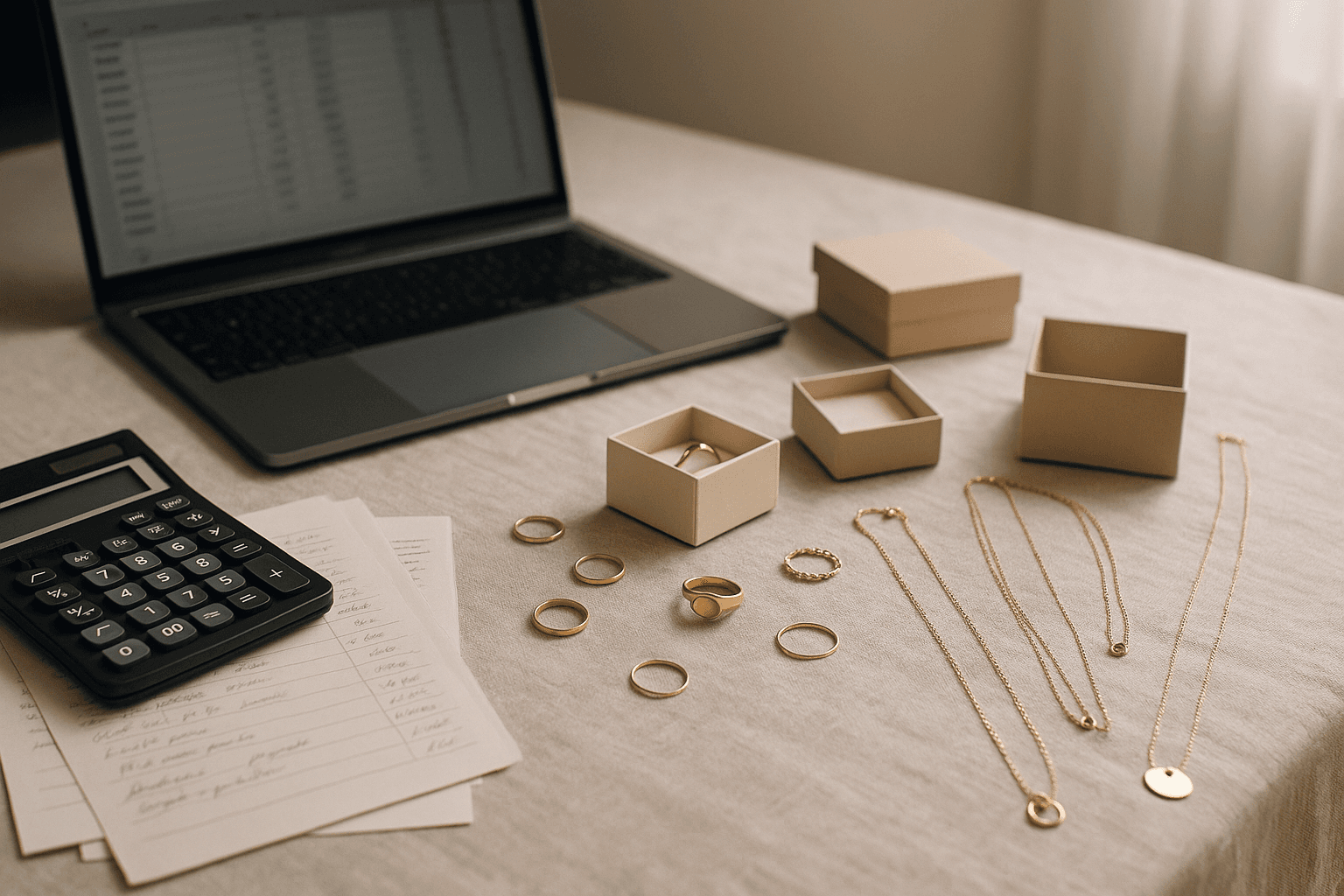
The most common mistake new founders make is pricing only from material cost. A bracelet that uses inexpensive beads can still take an hour to source, assemble, photograph, pack, and ship, and that time has value. A ring with higher material cost may actually be easier to produce than a more labor-intensive necklace. When you price only from what you paid your supplier, you ignore the hidden cost of operating a business. A better method is to build a per-item worksheet that includes direct materials, a labor rate, platform fees, and a contribution to overhead. Even if your numbers are approximate at first, the worksheet helps you see which products are truly profitable and which items need adjustment or retirement.
A simple pricing worksheet can start with three columns: hard cost, labor cost, and business cost. Hard cost is everything physically used to make the item. Labor cost is the amount you want to pay yourself for assembly, finishing, and preparation. Business cost includes the percentage that covers rent, software, marketing, packaging supplies, photography, samples, and the many smaller expenses that keep the business running. Once you know the total cost to create one item, you can determine a retail price that leaves room for profit. If you want a deeper breakdown of markup and margin, Pricing Handmade Jewelry for Profit Without Guesswork goes into that process in more detail with a practical lens.
It helps to separate retail pricing from wholesale pricing early, even if you are not ready to sell wholesale yet. Retail needs to cover your full business model, including your direct customer acquisition costs and the time involved in one-to-one fulfillment. Wholesale has a different math structure because you are selling at a lower price in exchange for larger orders and simpler customer acquisition. If you plan to offer both channels, avoid setting one price and hoping it can work for everything. Build a retail price first, then decide whether a wholesale price still protects your margins. If it does not, the product may need a different design, lower-cost materials, or a different role in your assortment.
Real brand story: Brands like Aurate are often discussed for their emphasis on pricing transparency and durable materials, which is a useful lesson for jewelry founders even if your own brand is much smaller. Customers do not need a complicated finance lesson, but they do respond to clear reasoning. When shoppers understand why a piece costs what it does, they are less likely to assume the price is arbitrary. That does not mean you need to publish every internal detail. It does mean your product page, photos, materials list, and brand voice should all support the value of the item. Pricing becomes easier when your presentation makes the price feel coherent rather than surprising.
One useful check is to ask whether your pricing matches the promise of your brand. A delicate gold-filled bracelet sold as an affordable everyday piece should be priced differently from a heavy sterling cuff positioned as a statement investment. Both can be profitable, but they live in different parts of the market. If you try to price a premium-feeling design like a budget accessory, you may train customers to undervalue the brand. If you price a simple, low-labor item like a luxury heirloom without the materials or story to support it, you may lose trust. Pricing is not only a math exercise; it is also a signal about quality, positioning, and the kind of customer you want to attract.
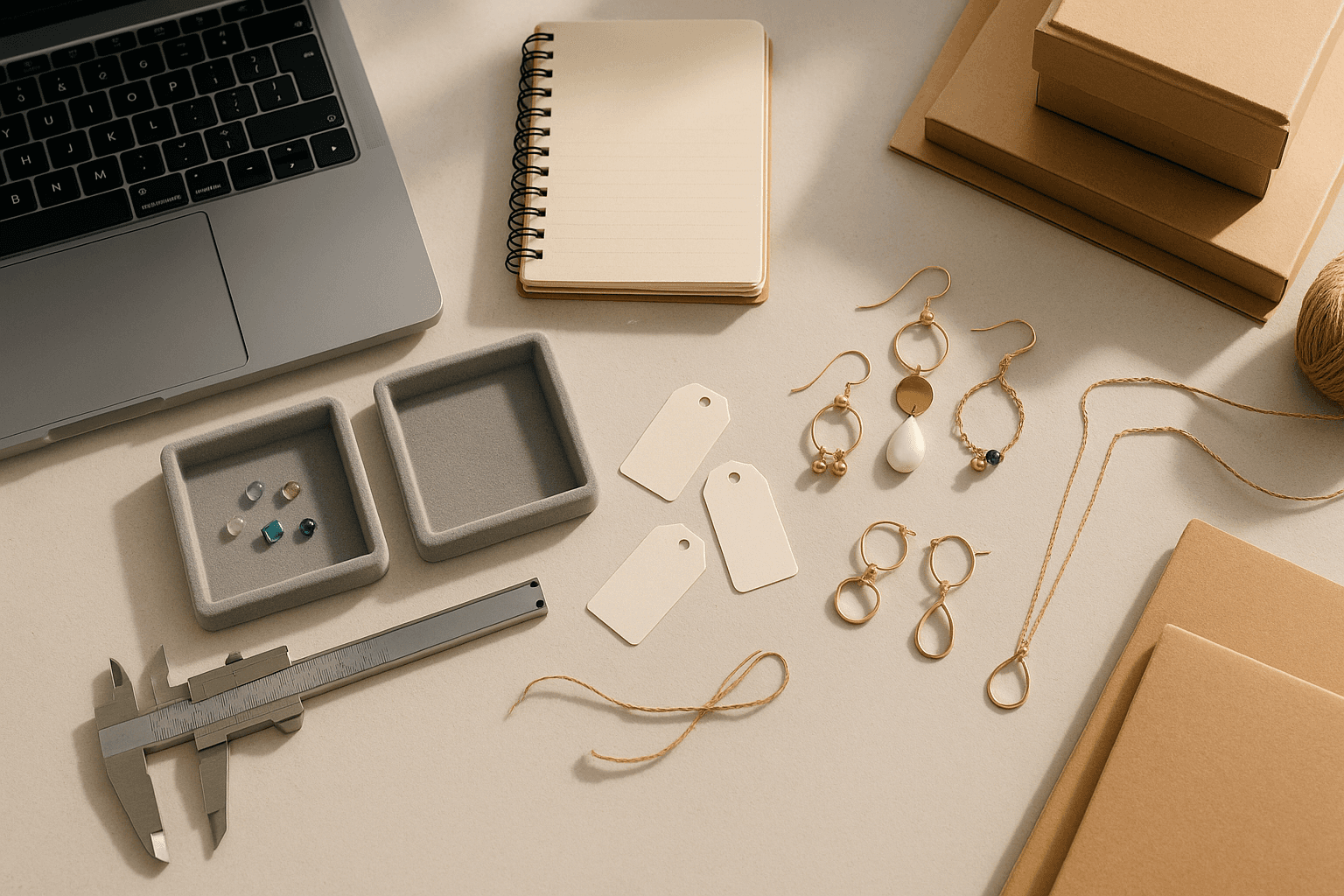
There is also a practical relationship between pricing and marketing. A price that looks high on paper may be entirely appropriate if your product photography, descriptions, and brand story communicate quality well. The reverse is also true: a low price can still feel expensive if the product page is vague or the visuals feel unpolished. This is why pricing should never be isolated from your marketing plan. If you are still building your product launch system, A Simple Marketing Plan for a Jewelry Brand can help you align offers, channels, and messaging so your prices are supported by a clear customer journey.
Action points: this week, make a spreadsheet for your top five products and list every material line item, average labor minutes, packaging cost, and payment fee you can identify. Next, set a target hourly rate for your own work and apply it consistently across products. Then compare each item’s price against its role in your collection: entry-level, core bestseller, gift item, or premium statement piece. If a product cannot support a healthy margin at its current design, test a simpler version, a different chain length, or a less expensive finding before you decide to discount it.
Once you have the basics, review your prices through the lens of assortment strategy. Not every item needs the same markup, and not every item should carry the same responsibility in your catalog. Some pieces are there to bring new customers in, while others are there to increase average order value or highlight craftsmanship. A well-balanced jewelry line can include lower-priced impulse buys, mid-range everyday pieces, and a few higher-priced anchors that communicate aspiration. The point is to make sure each product earns its place. If everything is priced like a bargain, your brand can struggle to grow. If everything is priced like a luxury item, you may have trouble converting first-time buyers.
When you decide whether your prices are working, look beyond sales volume. Ask whether you can restock without stress, whether you can pay yourself something meaningful, and whether you have enough room to run promotions without erasing your profit. Many founders discover that they have room for growth only after they stop discounting as a default strategy. That does not mean discounts are always wrong; it means they should be intentional and limited. A price that supports your margins gives you more options later, including better packaging, stronger photos, paid advertising, or more time to develop the next collection.
If you sell in person, pricing also needs to survive real-world questions. A market shopper may ask why one pair of earrings costs more than another that looks similar at a glance. Your answer should be ready before the question comes up. You might explain that the more expensive pair uses higher-grade metal, takes longer to assemble, or is designed for durability and repeat wear. The same clarity helps online. On your product pages, mention materials, origin if relevant, finish, and care instructions in a way that reinforces value without sounding defensive. If your team or assistants will ever answer customer questions, give them a short pricing explanation they can repeat confidently.
For founders who are nervous about raising prices, the best approach is usually incremental. You can test a new price on a small segment of your catalog, compare sell-through, and watch customer feedback before applying broader changes. You can also use bundles, gift sets, or tiered collections to create more accessible entry points without undermining your core pricing. The key is consistency. Prices should reflect a rational system, not a mood, and they should evolve when your costs, positioning, or craftsmanship change. If you review them every few months instead of every few years, you are more likely to stay profitable without shocking your audience.
Pricing feels technical, but it is also a leadership decision. You are deciding how your time, skill, and materials are valued in the marketplace. That can be uncomfortable at first, especially for makers who are used to undercharging in order to make a sale. But a jewelry business that lasts needs prices that can carry the business through slow seasons, material increases, and growth investments. The more clearly you understand your numbers, the more confidently you can explain them to customers, collaborators, and yourself. That confidence is part of the brand, and over time it becomes one of your strongest competitive advantages.
For a helpful framework on the broader mechanics behind business setup and structure, the U.S. Small Business Administration’s 10 steps to start your business is a solid external reference point. And if you want to make your pricing more visible to search-driven shoppers, Google’s helpful content guidance is a reminder that clear, people-first explanations tend to perform better than vague keyword-heavy copy. In other words, strong pricing is not just about math; it is about clarity, usefulness, and trust.