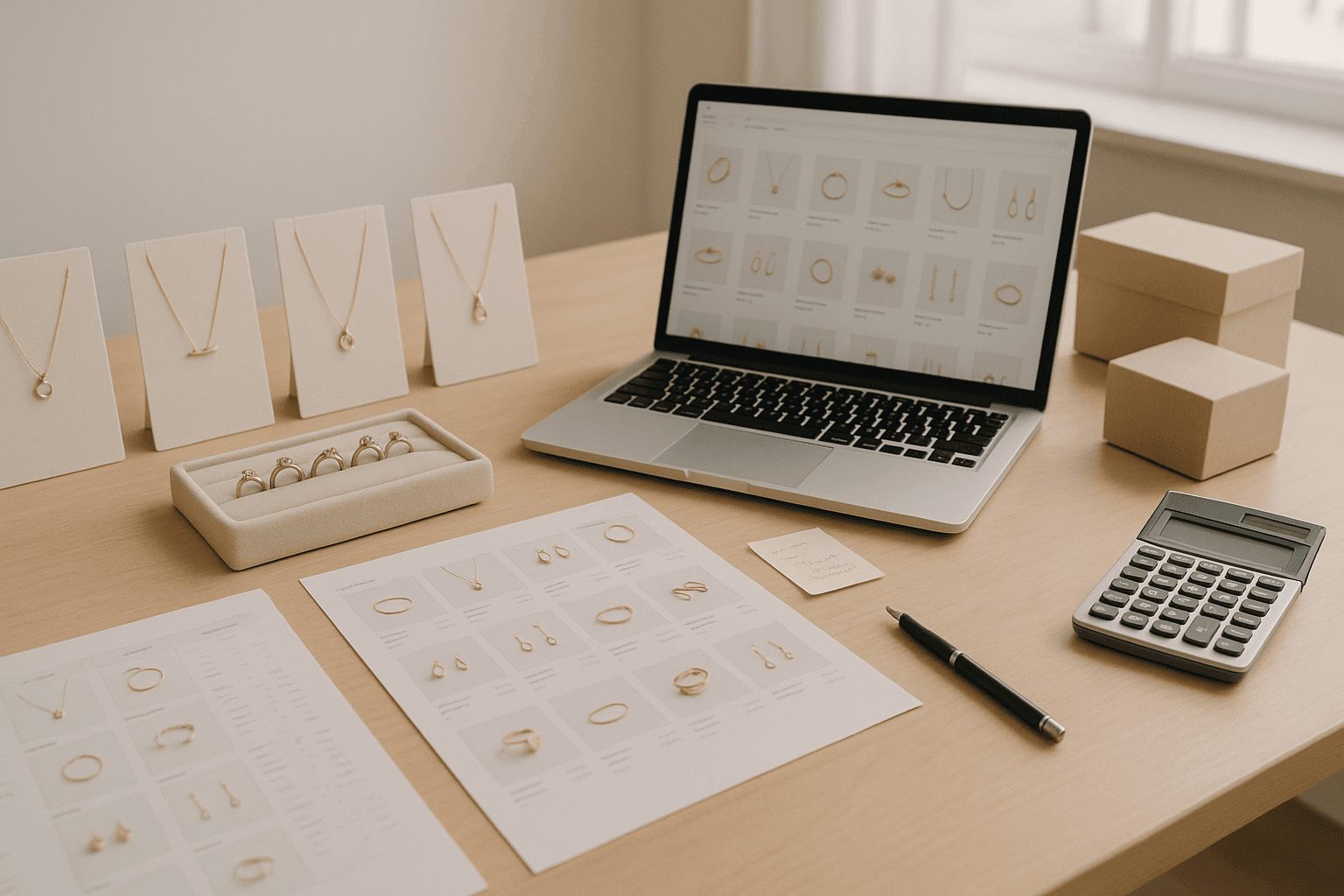
Jewelry wholesale is one of the clearest ways to grow beyond one-off direct sales, but it only works when the back end is organized before you start pitching buyers. If your line, pricing, inventory, and order process are still fuzzy, wholesale can turn into busywork instead of revenue. The goal is not simply to sell at a lower price in bigger quantities. The goal is to build a repeatable system that helps a retailer say yes quickly, reorder easily, and trust that your business can deliver consistently without constant hand-holding.
Start with the basics of your wholesale offer before you think about outreach. Decide which products belong in the wholesale line, how many SKUs you can reliably produce, and what style of brand you want retailers to understand at a glance. A strong wholesale assortment is usually narrower than your full direct-to-consumer catalog because buyers want clarity, not endless choice. If you need a refresher on how to organize the foundation of the business first, this startup guide for jewelry founders is a useful companion before you expand into wholesale.
Your pricing has to support both your margins and the retailer’s margin, or the conversation will end before it starts. Many founders make the mistake of building a wholesale price by cutting the retail price in half without checking whether their costs actually allow it. Before you present anything to buyers, calculate materials, labor, packaging, breakage allowance, and overhead, then test whether the wholesale price still leaves room for profit. If your pricing structure needs more clarity, this breakdown of pricing handmade jewelry can help you structure the math before you pitch a store.
Wholesale buyers also look for operational proof, not just pretty product photos. They want to know that your production lead times are realistic, your replenishment process is manageable, and your minimum order quantity makes sense for the size of their business. Put these details into a simple wholesale packet so a buyer can understand the terms without emailing you five times for the same information. A good packet usually includes your brand story, product categories, SKU list, materials, pricing tiers, lead times, care notes, and ordering instructions. Keep the language clean and specific, because retailers are often comparing several brands at once.
One of the most important decisions in jewelry wholesale is how many pieces a store must buy to make the order worth your time. Too low, and you spend hours packing and invoicing for a tiny order. Too high, and independent retailers may hesitate because they are testing your brand for the first time. Set a minimum order quantity that reflects your production reality and the buyer’s risk. It is often smarter to offer a reasonable opening order plus an easy reorder threshold than to demand a large initial commitment that scares away good accounts. The best wholesale programs create a path from test order to repeat order, not a one-time transaction.
Real brand story: Kendra Scott is often cited as a founder who started with a small budget and sold locally before expanding into broader retail. The practical lesson for jewelry wholesale is not that you need to start small forever, but that early growth usually comes from proving demand in manageable channels before layering on complexity. A local retailer, a small boutique, or a carefully chosen market can give you real feedback on which pieces actually move. That information is more valuable than a wide but shallow launch, because wholesale success depends on sell-through, not just on getting placement.
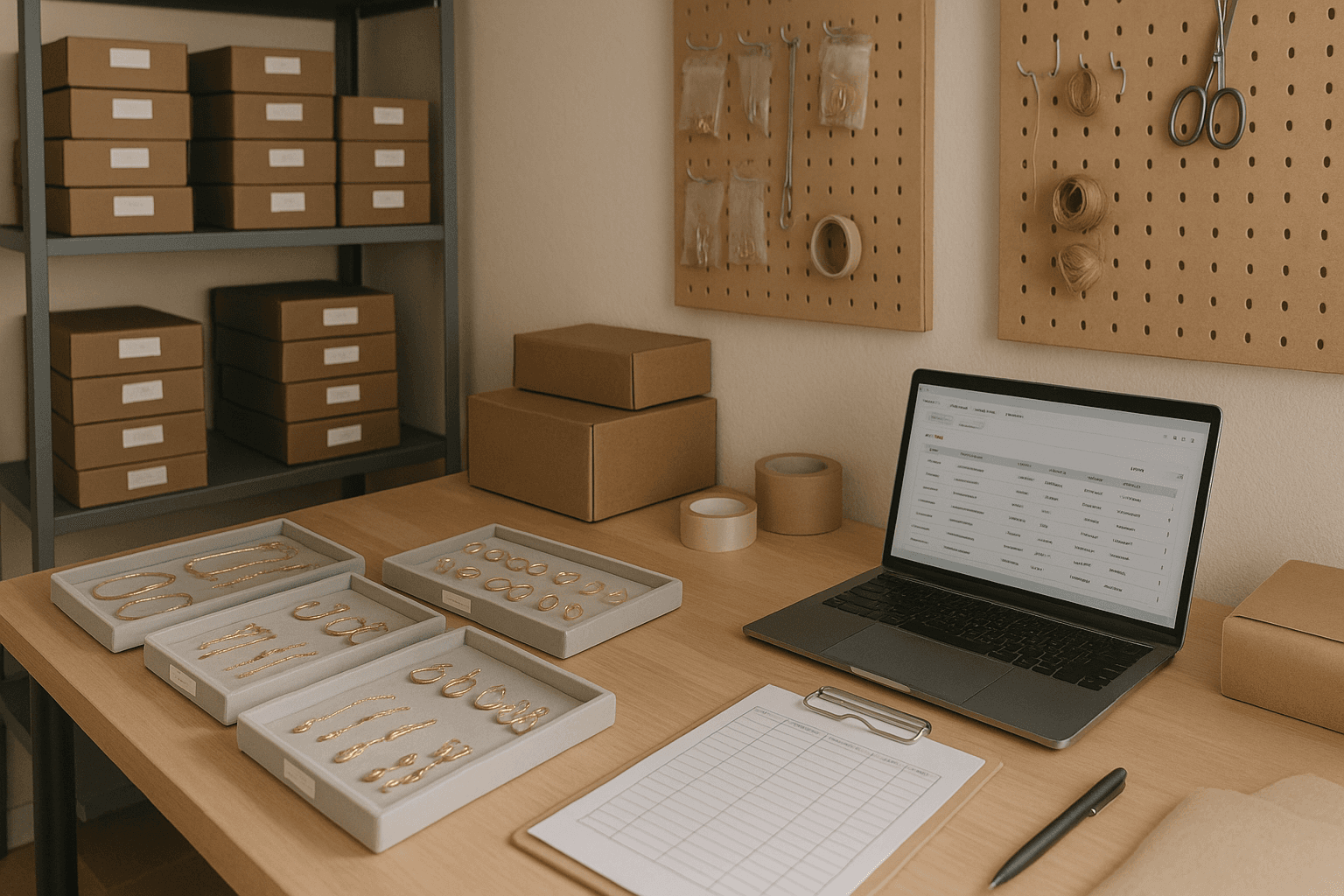
Your line sheet is the sales document that does most of the work for you once you are not in the room. It should be visually polished, but more importantly it should be easy to scan. Include product names, wholesale prices, retail prices, materials, dimensions, color options, SKU numbers, and clear photos on neutral backgrounds. If your products have variation, make that variation obvious. A retailer should not have to guess whether a necklace is adjustable or whether a ring is available in multiple sizes. For a broader view of how jewelry marketing and buyer education fit together, this marketing plan for jewelry brands is a helpful next step once your wholesale assets are in place.
The legal and compliance side matters more than many new founders realize, especially if your products include material claims, plating descriptions, gemstone language, or country-of-origin language. Retailers do not want to risk confusion on their sales floor, and they will often ask for straightforward product descriptions they can reuse. Make sure your materials and claims are accurate, and review the relevant guidance before you send labels or product copy to stores. The FTC jewelry business guidance is a practical reference if you want to reduce avoidable mistakes around product representation and advertising. You should also build a simple business plan that explains your production capacity and sales channels; the SBA's business plan guide is a useful structure for that work.
Finding wholesale buyers is less about blasting your line at every store and more about matching your product to the retailer’s customer and price point. Study boutiques, museum shops, gift stores, resort shops, and concept stores that already carry products in your aesthetic lane. Look at what they stock, what price range they feature, and whether your assortment fills a gap rather than duplicating what they already have. When you pitch, lead with why your line fits their shop, not with how hard you worked on it. Retailers respond to relevance, consistency, and a clear understanding of their shopper.
Action points: This week, choose five products that belong in your wholesale line and remove anything that feels too experimental, too fragile, or too hard to restock. Next, build a one-page wholesale sheet with your pricing, minimum order, lead time, and contact details, then create a second PDF with product photos and specifications. After that, make a list of ten local or regional retailers whose aesthetic matches your pieces, and write a short pitch for each store that mentions one specific reason your line fits their customer. Finally, review your product descriptions for clarity and compliance so you are ready when a buyer asks for details.
A strong wholesale email is short, specific, and easy to act on. Introduce the brand in one sentence, explain why you are reaching out to that store in particular, and attach or link your wholesale packet. If you have already sold through a local market, a pop-up, or your own site, mention that in plain language as social proof without overexplaining. Buyers care more about whether your product is ready for their shop than about a long origin story. Follow up once after a reasonable gap, then move on if there is no response. Persistence is useful in wholesale, but pushiness is not, and a steady professional tone will serve you better over time.
Real brand lesson: Catbird is a useful reminder that a recognizable point of view can begin with a small retail base and grow through consistency. For jewelry founders, that means your wholesale program should not feel generic or disconnected from your brand. Even if you are selling into stores, the line still needs a clear visual identity, a consistent material story, and packaging that feels like part of the same world. If you want customers and buyers to remember you, make sure your wholesale assortment is cohesive enough that a retailer can describe it in one breath. Strong wholesale brands do not try to be everything; they become easy to understand and easy to reorder.
The best wholesale programs improve over time because the founder pays attention to what retailers actually ask for after the first order. Which styles sell through fastest, which ones sit, which price points get repeated, and which packaging or display support helps the line move? Those answers should shape your next collection, your reorder policy, and your outreach list. Wholesale is not just a sales channel; it is market research with receipts. When you treat it that way, you stop guessing what buyers want and start building a line that gets stronger with every order. That is how jewelry wholesale becomes a stable growth channel instead of a stressful side project.