
Wholesale jewelry pricing is one of the fastest ways for a jewelry founder to grow beyond one-off sales, but it only works when the numbers, assortment, and operations are built with wholesale in mind. If you price for retail only and then try to sell to stores later, the margin math can collapse quickly. A healthy wholesale model needs clear production costs, a dependable replenishment plan, and product choices that make sense for retail partners. This article walks through how to build a wholesale program that supports profit, not just volume, so your brand can scale without guessing.
The first decision is whether your collection is actually ready for wholesale. Not every best-selling piece belongs in a store, and not every design should be shown to buyers. Wholesale buyers want consistency, clear product details, and a line that feels cohesive on a shelf or in an online catalog. Before reaching out, review your current assortment and ask whether each item can be produced reliably in the same materials, same finish, and same dimensions every time. If your production varies too much, buyers may hesitate because they need confidence that a reorder will match the original order.
Wholesale pricing starts with the same cost discipline you would use for retail, but it requires a more structured margin strategy. Your wholesale price has to cover materials, labor, packaging, overhead, rejects, and the time you spend on admin, customer communication, and restocking. If you need a refresher on the cost side of your products, Pricing Handmade Jewelry for Profit Without Guesswork is a useful companion because it helps you build from real costs instead of emotional pricing. Once you know your true unit cost, you can test whether your retail price leaves enough room for wholesale without shrinking your profit to nothing.
A common rule of thumb in wholesale is that retail should support a healthy margin between your direct costs and your selling price, but the exact structure depends on your materials and production method. The important part is not the rule itself but whether your wholesale offer leaves enough room for the retailer to profit too. Store owners need a margin that justifies taking up shelf space, handling inventory, and selling your brand alongside others. If your retail price is already too close to your cost, wholesale will force you into an unsustainable discount structure, so solve that before you pitch anyone.
Your product mix also matters. Wholesale buyers often prefer a compact assortment with clear categories, not a sprawling catalog of nearly identical items. Think in terms of hero styles, entry price points, and a few add-on pieces that help increase average order value. A good wholesale line usually includes items that photograph well, display well, and convert quickly in a retail setting. Pieces with obvious sizing flexibility, strong visual identity, and manageable breakage risk are usually easier to wholesale than highly customized or fragile designs. The easier your assortment is for a store to understand, the easier it is for them to reorder.
Real brand lesson: Catbird is often remembered as a Brooklyn jewelry shop that built a distinct point of view from a small retail base before becoming widely recognized. The practical takeaway for founders is not to imitate the scale, but to study the clarity. Retail buyers respond to brands that know exactly what they are selling and why customers will care. A strong point of view makes your line easier to merchandise, easier to explain, and easier to remember. If you can communicate a recognizable story in a few sentences, your wholesale outreach becomes less about convincing and more about fitting into a store’s existing customer mix.
Before you pitch, prepare the core wholesale assets that buyers expect. You need a clean line sheet, concise product names, wholesale and retail pricing, materials, dimensions, minimum order quantity, lead times, and reorder terms. You also need product photos that show the jewelry clearly on white or neutral backgrounds, plus a few lifestyle images if they support the brand story. For the broader brand messaging and outreach sequence, A Simple Marketing Plan for a Jewelry Brand can help you organize your communication so you are not improvising every email. Wholesale works better when buyers see a polished, consistent system instead of scattered product information.
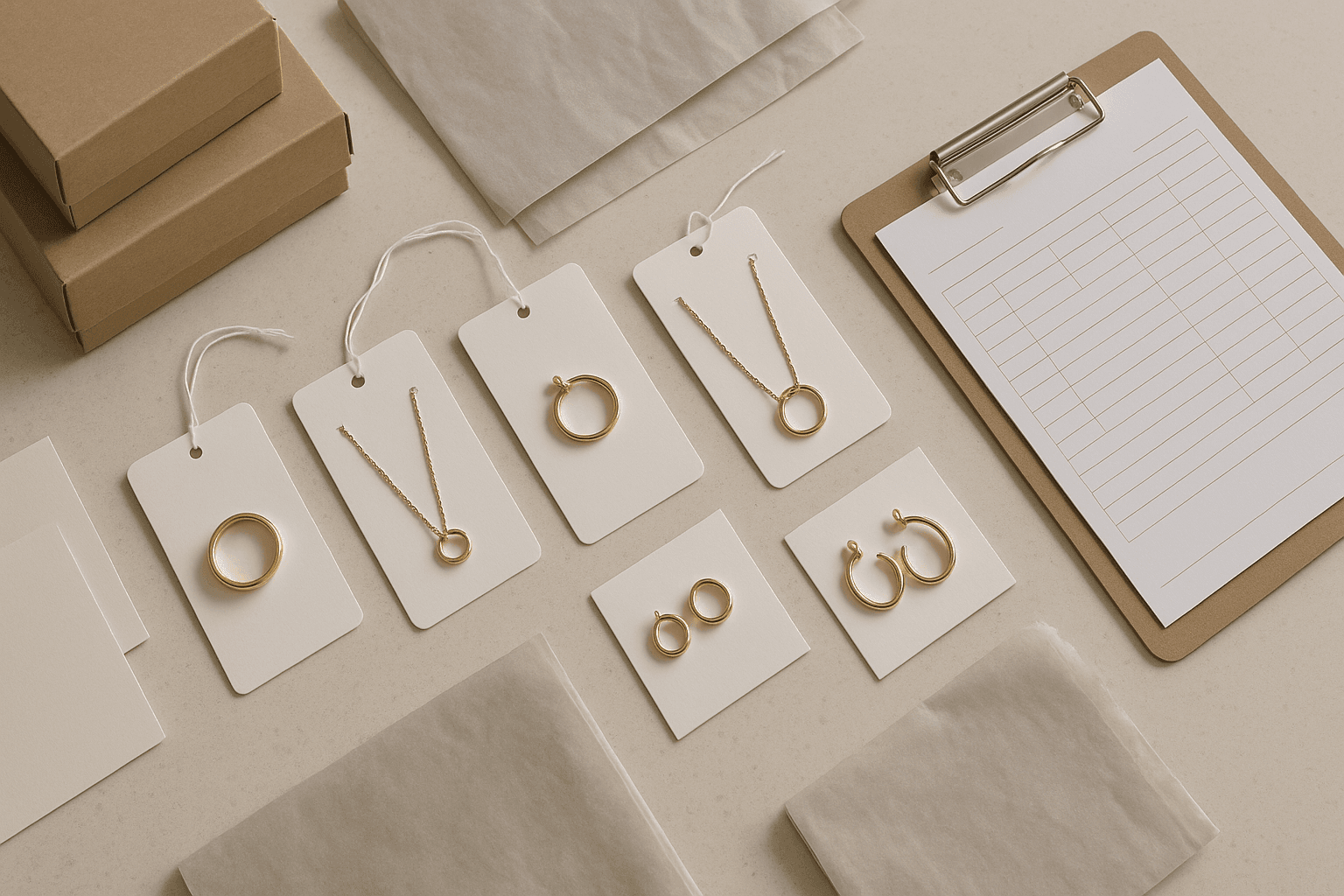
Action points: this week, audit your top ten products and mark which ones can be manufactured repeatedly without quality drift. Then calculate the true per-unit cost for each style, including packaging and assembly time, and decide which pieces can sustain wholesale pricing. Draft a one-page line sheet with your best five to eight items, and make sure every item has a wholesale price, retail price, and minimum order quantity. Finally, build a short outreach list of stores that already sell jewelry in your price range and aesthetic, because relevance matters more than volume in the first round of outreach.
When you price for wholesale, order minimums protect your time and production flow. A minimum order quantity helps prevent tiny orders that create too much admin for too little revenue. It also tells buyers that your brand is structured and ready for trade. The minimum should be high enough to make the order worth fulfilling, but not so high that it blocks first-time buyers from trying your line. Many founders start by setting a minimum based on the smallest order that still produces acceptable profit after labor and shipping. If your minimum feels arbitrary, build it from actual time and cost data rather than guessing what stores might accept.
Payment terms deserve the same attention as pricing. Some founders are tempted to offer generous terms too early, but every delayed payment creates cash-flow pressure when you still need to buy materials and pay for production. Start with terms you can support comfortably, and if you offer net terms later, make sure you understand the timing gap between materials, production, shipping, and invoice collection. The SBA’s write your business plan guide is useful here because it pushes you to think beyond sales goals and into operating realities such as cash flow, costs, and growth planning. Wholesale can look impressive on paper while quietly draining cash if your timing is off.
You should also think about compliance and product claims before placing your line in front of retailers. Jewelry descriptions need to be accurate, especially around materials, plating, gemstones, and care instructions. If you make claims about precious metal content, origin, or durability, your documentation should be consistent across your website, line sheet, and invoices. The FTC’s jewelry business guidance is worth reviewing because it helps you avoid sloppy product language that can create trust problems with both customers and buyers. In wholesale, clarity is part of professionalism, and professional documentation makes a retailer more comfortable placing an order.
Real brand story: Mejuri is frequently cited as a direct-to-consumer fine jewelry brand that pairs frequent product drops with material education. The lesson for a smaller founder is that education can strengthen selling across channels, including wholesale. Retail buyers are not only buying the object; they are buying the confidence that their customers will understand the materials, wearability, and value. That means your line sheet, product copy, and rep conversations should explain why your jewelry matters in straightforward language. Education does not have to be long, but it does have to be consistent, because confusion slows down the sale.
Digital discoverability still matters even if your wholesale business is mostly relationship-driven. Buyers often check a brand’s website before replying, and they want to see whether the line is current, searchable, and easy to understand. If your site is a mess, your wholesale pitch can lose momentum before a real conversation begins. The Google SEO Starter Guide is helpful for understanding the basics of making your brand easier to find and navigate. For jewelry founders, the practical goal is not gaming search engines; it is making sure your products, categories, and pages are organized well enough that a buyer can quickly assess your brand and trust what they see.
The best wholesale programs grow from strong retail fundamentals, not from urgency. If you have not yet sold enough direct-to-consumer inventory to understand your bestsellers, it may be smarter to refine your product line first. If you do have steady demand, wholesale can widen your reach and create more predictable repeat orders, especially when stores help introduce your work to customers who would not have found you online. If you want the broader foundation that supports this stage, How to Start a Jewelry Business From the First Product to First Sale is a useful starting point for owners still tightening the basics. Wholesale is not a shortcut; it is a second sales system that only works when your first one is disciplined enough to support it.