
Wholesale pricing is one of the first places jewelry founders either protect their profit or quietly give it away. If you are making necklaces, rings, earrings, or bracelets and want to sell through boutiques, pop-ups, or reps, you need a pricing structure that works on both sides of the counter. That means your wholesale number cannot be a guess, a competitor copy, or a simple markup from your material cost. It has to reflect labor, packaging, breakage, payment terms, retailer expectations, and the reality that you may also need room for direct-to-consumer sales later. This article walks through a practical way to build wholesale pricing that feels fair, defendable, and ready for real orders.
The first step is to separate retail pricing from wholesale pricing and understand what each one must accomplish. Retail price supports your full margin when you sell directly to a customer through your site, market booth, or social channels. Wholesale price is the lower price a retailer pays because they are taking on selling, merchandising, and often customer acquisition. A simple pricing structure usually starts with knowing your total unit cost, then setting a retail price that gives you healthy margin, and then setting a wholesale price that still leaves enough room for the retailer to mark up the piece. If you need a deeper breakdown of cost-based pricing, Pricing Handmade Jewelry for Profit Without Guesswork is a useful companion guide.
A practical wholesale formula usually begins with your landed cost per piece. That includes materials, findings, chains, stones, packaging, shipping from suppliers, and the labor you actually spend making and finishing the item. Once you have that number, you can test it against your intended margin. Many jewelry founders are tempted to price from material cost alone, but labor and overhead are what make a business sustainable. If you use a line sheet or catalog, every product should have a wholesale price, a suggested retail price, dimensions, materials, and a short product description so buyers can evaluate the item quickly. If you are still building the foundation of your brand, the How to Start a Jewelry Business From the First Product to First Sale guide can help you align pricing with the rest of your setup.
One of the easiest ways to check whether your wholesale pricing is realistic is to test the retailer math backward. A boutique typically wants to double the wholesale price or more, depending on category and price point. If your wholesale price is $40, the retailer may want a $80 retail price. If the market for your product cannot support that price, then your wholesale number may be too high or your product positioning may need to change. This is why it helps to decide early whether your brand is casual, giftable, premium, or fine jewelry in feel, because the channel you want to sell through should match the price customers are willing to pay. Wholesale pricing works best when product quality, perceived value, and customer demand all point in the same direction.
Do not forget that wholesale terms affect pricing as much as the unit number does. A retailer who pays in 30 days after delivery is not the same as a direct customer who pays in full at checkout. If you offer net terms, you are financing part of that relationship, so your wholesale price needs to absorb the risk of delayed payment and possible returns or damages. Even if you require prepayment, you still have to account for production planning, minimum order quantities, replenishment time, and how much inventory you can safely commit. For business structure and planning discipline, the SBA’s write your business plan resource is a good reference point for thinking through sales channels, costs, and operating assumptions before you scale.
Real brand lesson: Mejuri is often discussed as a brand that helped normalize clearer material education and consistent product drops, which matters because pricing becomes easier when the customer understands what they are buying. For a jewelry founder, the lesson is not to copy a brand’s exact price points, but to make sure your own pricing tells a coherent story about materials, craftsmanship, and intended use. If your pieces are handmade and small-batch, your wholesale numbers should not pretend you are a mass manufacturer. The stronger your product story, the easier it is to justify your pricing to buyers who need confidence that the item will sell at retail.
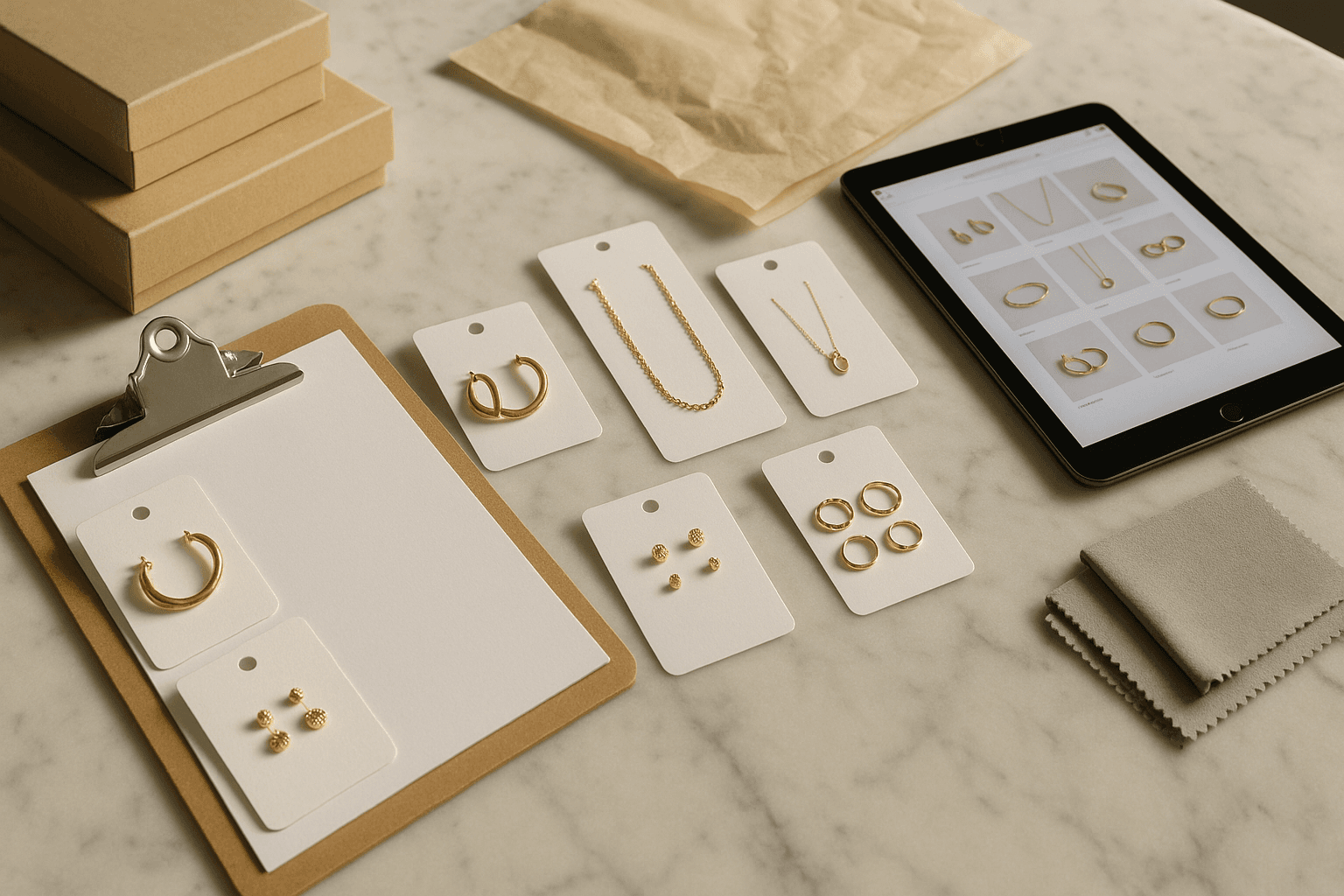
When you create wholesale pricing, make sure your numbers leave room for future growth rather than locking you into a model that only works at tiny scale. Early on, founders often underprice because they want the first order. That can create a trap where every reorder becomes harder to fulfill profitably as material prices rise or production takes longer. A better approach is to set a floor price you will not go below, then build a standard wholesale number above that floor. If you offer custom work, limited editions, or upgrades like vermeil, gemstones, or premium packaging, each variation should have its own pricing logic instead of being absorbed into a flat rate. This is the kind of operational thinking that keeps a jewelry line from becoming busy but unprofitable.
Before you send a line sheet to a buyer, review whether your assortment is actually wholesale-ready. Wholesale buyers usually want consistency, easy-to-understand variants, and products that can be reordered. That means your pricing should not depend on one-off sourcing quirks or a design that takes six different fabrication steps unless the retail price fully supports it. It also helps to keep your product descriptions factual and precise, especially for materials and care instructions, because jewelry claims can create compliance issues if they are vague. The FTC’s Jewelry Guides are useful for understanding how material descriptions and terminology should be handled so your catalog and labels stay clear and credible.
Action points: this week, pick three best-selling or most repeatable pieces and calculate their true unit cost, including labor and packaging. Then set a retail price and back into a wholesale price that still leaves room for the retailer’s markup. Draft a one-page line sheet with product name, wholesale price, suggested retail price, materials, dimensions, and minimum order quantity. Next, decide your payment terms in writing, even if you only offer prepayment at first. Finally, compare your wholesale prices against at least two similar products in your category so you can see whether you are positioned as accessible, mid-range, or premium. If your numbers feel too tight, adjust the product or the channel before you lower the price.
Wholesale pricing also shapes how you market your jewelry business because buyers and retail customers respond to different messages. A retailer wants to know whether the product sells, how much shelf space it needs, how often it restocks, and whether the line has a clear point of view. That means your wholesale pitch should be built around bestsellers, material quality, consistency, and simple merchandising. Your consumer-facing content can still tell the brand story, but your wholesale assets need to do a different job. If you want help organizing that side of the business, A Simple Marketing Plan for a Jewelry Brand is a useful reference for turning product strengths into a repeatable outreach system.
Search visibility matters for wholesale too, especially if buyers discover you through your website before they ever reply to an email. Your wholesale page, line sheet PDF, and product pages should all use clear category language so a buyer can understand your offer fast. Google’s SEO Starter Guide is a practical reminder that helpful structure, descriptive headings, and easy navigation support discovery. For a jewelry brand, that means naming products accurately, using material terms consistently, and making wholesale information easy to find without forcing a buyer to hunt through your site. Strong SEO does not replace sales outreach, but it can make your brand look more established when a retailer checks you out.
Another important part of wholesale pricing is protecting your direct-to-consumer channel. If your wholesale price is too close to your retail price, you create conflict and lose flexibility for promotions, bundles, or seasonal discounts. If it is too low, your retailers may undercut the perceived value of your brand, especially if they mark up aggressively while you barely profit. The healthiest setup gives you enough space to sell directly at full price, offer occasional promotions without panic, and still make wholesale attractive for the right stockists. That balance is one reason many founders wait until they understand their costs and customer demand before expanding into wholesale. Pricing is not separate from growth; it is the structure that makes growth possible.